
Kavala – Attractions, History and Beautiful Places to Explore
Kavala (Καβάλα), with the stress on the second “a”, is one of the most picturesque coastal cities in Northern Greece. Built amphitheatrically on the slopes overlooking the Aegean Sea, the city impresses visitors with its rich history, beautiful views, historic architecture and lively waterfront promenade.
Here, the past and modern life intertwine in fascinating ways. In just a few minutes, you can walk from modern shopping streets and cafés to the narrow cobblestone lanes of the old town, where time seems to have stood still.
Kavala is a wonderful destination not only for a summer holiday but also for a short getaway in autumn, winter or spring. The city is lively all year round and offers plenty of interesting places to explore over a weekend.
A Brief History of Kavala
The history of Kavala spans more than 2,500 years. The city was founded in antiquity as Neapolis, meaning “new city”, and developed into an important port on the Aegean Sea.
Throughout different historical periods, it was known by the names Neapolis, Christoupolis and Kavala. Thanks to its strategic location, the city played an important role in trade and connections between different parts of the region.
One of the most significant events in its history was the arrival of the Apostle Paul in the 1st century AD. According to Christian tradition, he landed at the port of ancient Neapolis before continuing to Philippi, where he preached Christianity.
Over the centuries, Kavala experienced various periods of development. Traces of the Byzantine and Ottoman eras can still be seen throughout the city. During the 19th and early 20th centuries, Kavala became an important centre of the tobacco trade.
This rich past has left behind a diverse architectural heritage, making a walk through Kavala particularly interesting.
The Old Town of Panagia – The Most Picturesque Part of Kavala
One place you should definitely visit is the old town of Panagia (Παναγία).
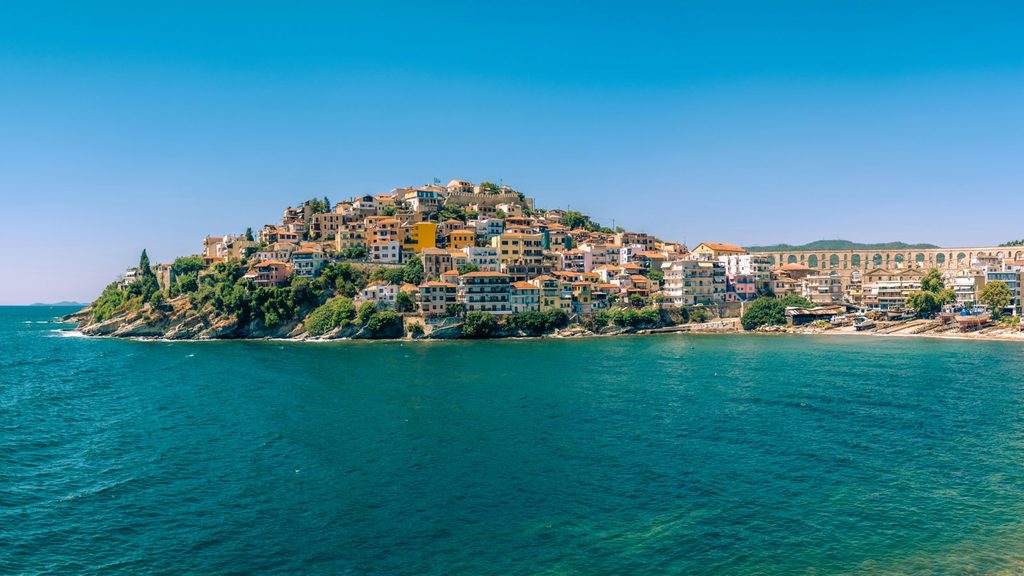
Situated on a small peninsula rising above the harbour, it is the most historic part of Kavala.
Narrow cobblestone streets, traditional houses, colourful façades, wooden balconies and beautiful sea views create a truly unique atmosphere.
The best way to explore Panagia is on foot. There is also a small car park, but it is not recommended due to limited capacity and congestion. The car park near the harbour is the most convenient option. Walking uphill along the steep streets reveals a succession of panoramic views of the city, ships and sea.
Along the way, you will discover small squares, historic buildings and cosy spots where you can stop for a short break.
Kavala Fortress – The Best Panoramic Views
At the highest point of the old town stands Kavala Fortress, one of the city’s most recognisable landmarks.
The present-day fortifications were built mainly in the 15th century on the remains of an older Byzantine fortress.
The fortress served to protect and control important routes in the surrounding area. Today, it is a historic site offering impressive views.
From the fortress walls and tower, you can admire Kavala’s amphitheatrically arranged neighbourhoods, the harbour, the Aegean Sea and the surrounding hills.
It is one of the best places for photography, especially in the hours leading up to sunset.
The Kamares Aqueduct – One of the City’s Symbols
One of Kavala’s best-known architectural landmarks is the Kamares Aqueduct (Καμάρες).
This monumental structure, featuring numerous arches, formed part of the city’s historic water supply system.
The aqueduct was largely reconstructed in the 16th century during the reign of Sultan Suleiman the Magnificent. Today, it is one of Kavala’s most recognisable symbols.
Its massive stone arches create an interesting contrast with the modern buildings and streets surrounding them.
Kamares is well worth visiting even if you have only a few hours to spend in the city.
The House of Muhammad Ali and the Imaret
As you explore the old town of Panagia, you will come across Muhammad Ali Square.
Here, you will find his birthplace and equestrian statue.
Muhammad Ali was born in Kavala in the 18th century and later became the ruler of Egypt and the founder of a dynasty that governed the country during the 19th and 20th centuries.
Not far from his house stands the Imaret, one of the most impressive historic buildings in Kavala.
Built in the 19th century, the complex originally served educational, religious and charitable purposes. Today, the building has been restored and operates as a luxury hotel.
The Imaret is distinguished by its characteristic Ottoman architecture, arches, domes and inner courtyards.
Even if you admire it only from the outside, it is an important stop during a walk through the old town.
The Harbour and Waterfront Promenade
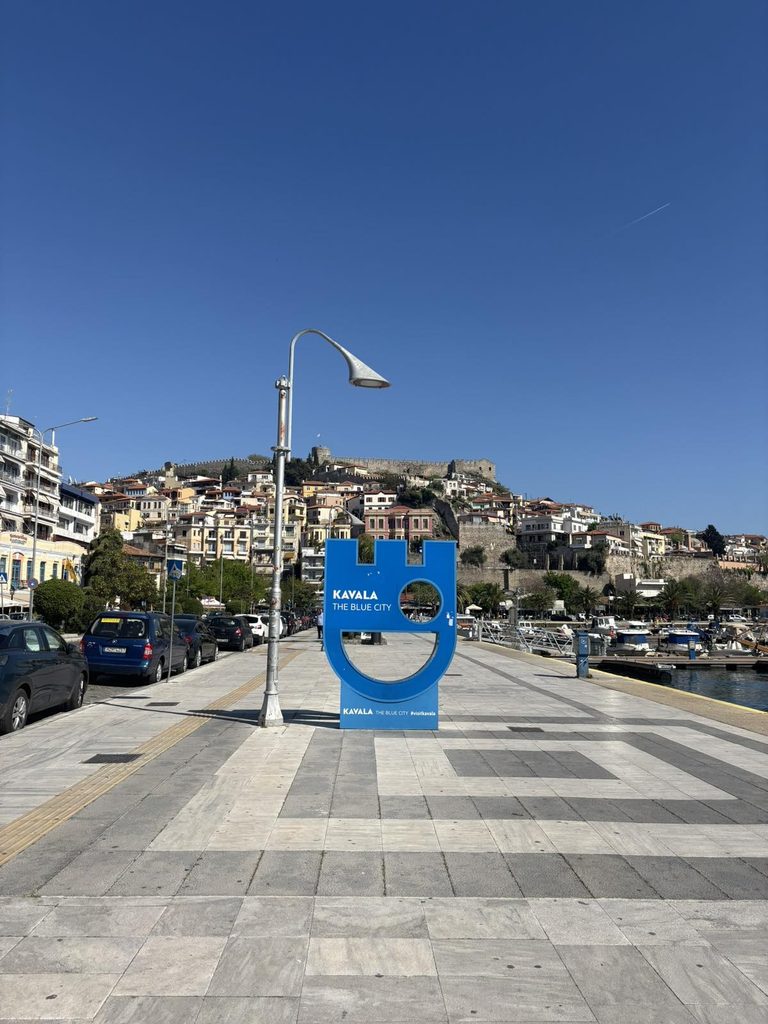
After exploring the historic landmarks, it is well worth taking a stroll along Kavala’s waterfront.
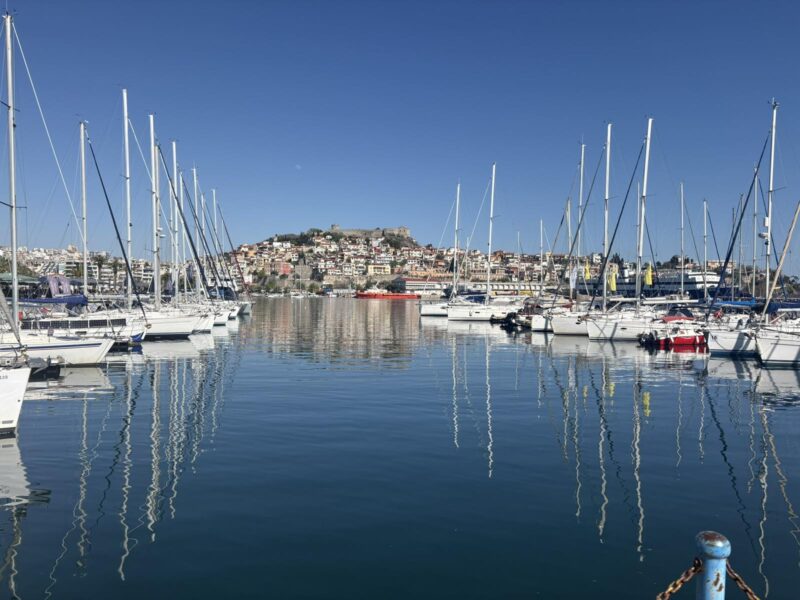
The harbour is one of the liveliest places in the city. Here, you can watch fishing boats, yachts and ferries while enjoying views of the old town and fortress.
Along the seafront, you will find numerous cafés, restaurants and tavernas where you can sample traditional Greek dishes, fresh fish and seafood.
In the evening, the waterfront promenade takes on a particularly pleasant atmosphere as the city lights reflect on the water.
Shopping and Exploring the City Centre
Kavala is not only a tourist destination but also a vibrant city with shops, markets and commercial streets.
One of the main shopping streets is Omonia (Ομόνοια), where you will find clothing and shoe shops, as well as stores selling a variety of goods.
The city centre is home to numerous cafés, pastry shops and restaurants, making it an ideal place to take a break after a walk.
Another interesting option is to visit the local open-air market, where you can browse seasonal fruit and vegetables, olives and other local products. The market takes place every Saturday in the eastern part of the city.
Restaurants and Cafés
Kavala offers a wide selection of small and larger tavernas. Some are located along the waterfront, but locals may advise you to avoid them because of their tourist-oriented character.
Two of the city’s favourite tavernas are Apiko, a traditional Greek restaurant near the harbour, and Sousouro, tucked away in the narrow streets of the city centre.
The old town of Panagia also has some pleasant places to eat and drink.
When it comes to coffee, you are unlikely to go wrong wherever you choose to sit. For breakfast treats and sweets, Sklaris is a well-known chain, while Ntino is one of the pastry shops renowned for the high quality of its desserts.
The Beaches of Kavala and the Surrounding Area

Although Kavala offers much more than a seaside holiday, its beaches are an important part of its appeal.
Within the city, you will find Rapsani Beach, while Kalamitsa and Batis are located nearby.
West of Kavala lie the popular coastal settlements of Palio, Nea Iraklitsa and Nea Peramos. The area is known for its beautiful bays, sandy beaches and family-friendly holiday options.
One of the most popular beaches is Ammolofoi, located near Nea Peramos.
Is Kavala Worth Visiting Outside the Summer Season?
Absolutely. One of Kavala’s greatest advantages is that it is not a typical seasonal resort.
In autumn and winter, you can explore the historic landmarks, wander through the old town, visit…